
Gutenberg Phase
Quick Definition
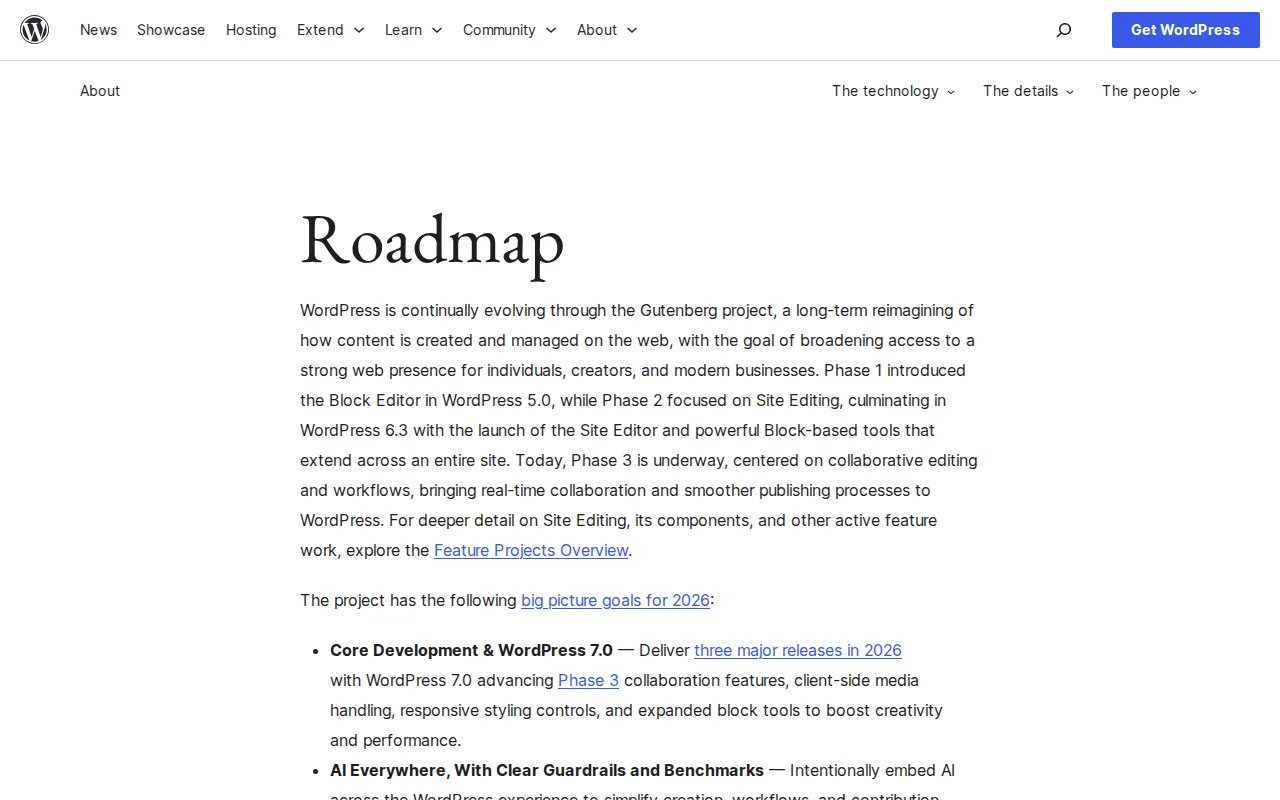
The Gutenberg project has four phases that reshape WordPress: Phase 1 (Editing), Phase 2 (Customization/Site Editing), Phase 3 (Collaboration — current, powering WordPress 7.0), and Phase 4 (Multilingual).
What Are the Gutenberg Phases?
The Gutenberg project is WordPress's long-term plan to modernize how you build and manage websites. Named after Johannes Gutenberg (inventor of the printing press), it is divided into four phases — each transforming a major piece of WordPress:
- Phase 1: Editing (WordPress 5.0, December 2018) — Replaced the classic text editor with the block editor. Every piece of content — paragraphs, images, headings, buttons — became a block you could drag, drop, and rearrange. This was the most controversial WordPress change in years, but it laid the foundation for everything that followed.
- Phase 2: Customization / Site Editing (WordPress 5.9–6.x, 2022–2025) — Extended blocks beyond posts and pages to your entire site. The Site Editor lets you visually edit headers, footers, templates, and template parts. Block themes replaced the Customizer. Global Styles via
theme.jsongave you centralized design control. This phase made WordPress a true visual site builder. - Phase 3: Collaboration (WordPress 7.0, April 2026 — current) — Adds real-time multi-author editing, content notes, visual revisions, and workflow tools. The goal: teams can create, review, and publish content together inside WordPress — without needing Google Docs or Notion. This also includes the Interactivity API and the MCP/Abilities API for AI integration.
- Phase 4: Multilingual (future) — Native multilingual content management built directly into WordPress core. This would let you manage translations without plugins like Polylang or WPML — the most requested missing feature in WordPress. No timeline has been announced, but it is the official next phase after collaboration.
Gutenberg Phases in Practice
Understanding the phases helps you make sense of where WordPress is heading. Each major WordPress release advances the current phase:
- WordPress 5.0–5.8 = Phase 1 (block editor matured)
- WordPress 5.9–6.7 = Phase 2 (Site Editor, block themes, Global Styles, Navigation block, Query Loop, synced patterns)
- WordPress 7.0+ = Phase 3 (real-time collaboration, DataViews admin, responsive editing, AI foundation)
Each phase builds on the last. You cannot have Site Editing (Phase 2) without blocks (Phase 1). You cannot have real-time collaboration (Phase 3) without the Site Editor (Phase 2). And multilingual support (Phase 4) will need all three foundations in place.
For site owners, the practical takeaway: block themes and the Site Editor are the present. Collaboration tools are arriving now. Native multilingual is the future. Plan your WordPress investments accordingly.
Why It Matters
The Gutenberg phases are the roadmap for WordPress's next decade. Every theme, plugin, and workflow decision is shaped by which phase WordPress is in. Understanding the phases helps you adopt new features at the right time, choose themes and tools that align with where the platform is heading, and avoid investing in approaches that WordPress is actively replacing.