
Schema Markup
Quick Definition
Schema markup is structured data code you add to your WordPress pages to help search engines understand your content. It can earn you rich snippets in Google — like star ratings, FAQs, and recipe cards — which boost click-through rates.
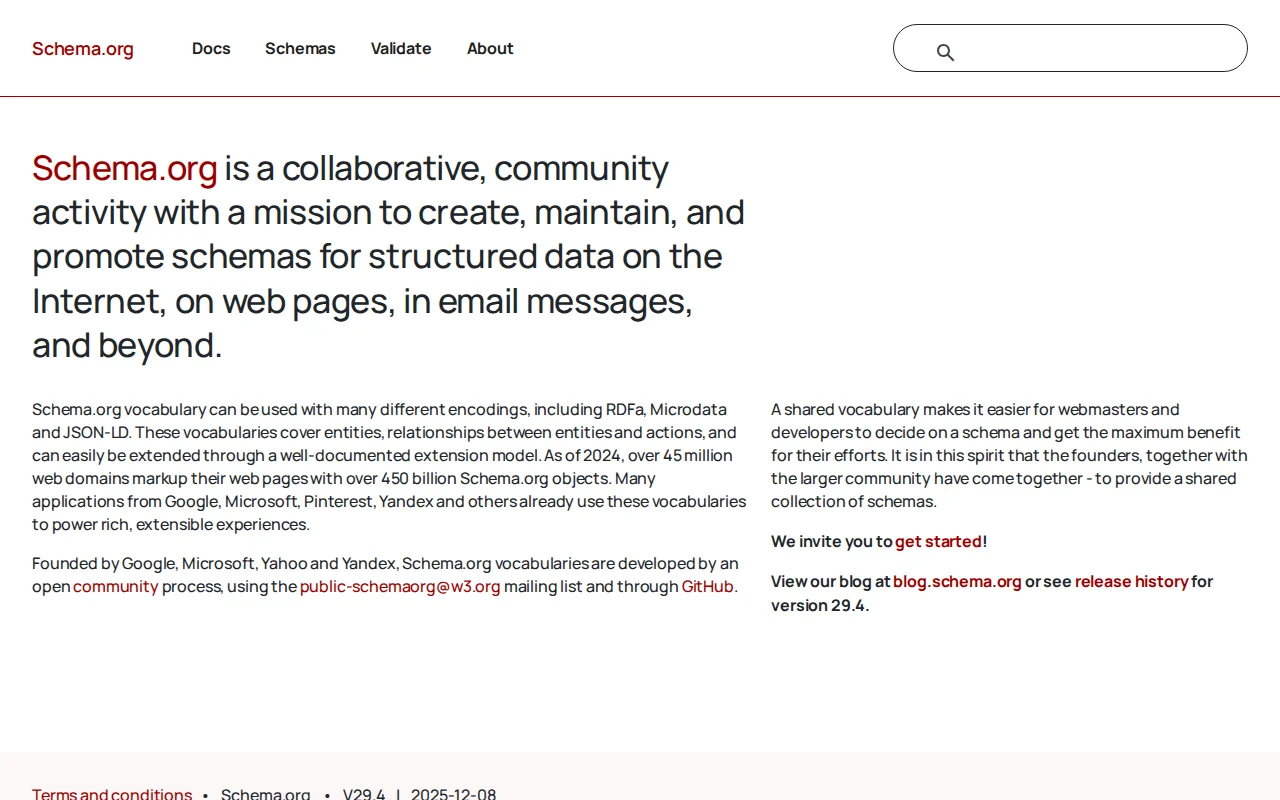
What Is Schema Markup?
Schema markup is a type of structured data — special code added to your web pages that tells search engines exactly what your content means, not just what it says. It uses a standardized vocabulary maintained at Schema.org (a joint project by Google, Microsoft, Yahoo, and Yandex) to label things like articles, reviews, products, recipes, events, FAQs, and more.
Without schema markup, Google reads your page and guesses what it is about. With schema markup, you are explicitly telling Google: "This is a product review with a rating of 4.5 out of 5" or "This is a how-to guide with 8 steps." That clarity helps Google display your content as rich snippets — enhanced search results with star ratings, prices, images, FAQ dropdowns, and more.
Google recommends using the JSON-LD format for schema markup, which is a block of JavaScript added to your page's <head> or <body>. It looks like this:
<script type="application/ld+json">{"@context":"https://schema.org","@type":"Article","headline":"How to Speed Up WordPress"}</script>
Schema Markup for WordPress
You do not need to write JSON-LD by hand. WordPress SEO plugins generate it automatically:
- Rank Math — Built-in schema generator with 20+ schema types. Automatically adds Article, Breadcrumb, and Organization schema. Lets you pick schema type per post.
- Yoast SEO — Adds Article, Organization, Breadcrumb, and WebPage schema automatically. Premium version adds more types.
- Schema Pro — A dedicated schema plugin with advanced options for custom post types and conditional rules.
Common schema types for WordPress sites include:
- Article / BlogPosting — For blog posts and guides
- Review — For product reviews (shows star ratings in Google)
- FAQPage — For FAQ sections (shows expandable Q&A in search results)
- HowTo — For step-by-step tutorials (shows steps in Google)
- BreadcrumbList — For navigation breadcrumbs
- LocalBusiness — For local businesses (shows address, hours, phone)
Why It Matters
Websites with properly implemented schema markup see 20–30% higher click-through rates compared to standard listings. Rich snippets make your result visually larger and more informative, which naturally attracts more clicks — even if you are not in position one. In 2026, schema is even more important because AI search engines like Google AI Overview, ChatGPT, and Perplexity also use structured data to understand your content's type, author, and credibility. Adding schema to your WordPress site is one of the highest-impact, lowest-effort SEO improvements you can make.
Sources: Google — Structured Data, Google — Search Gallery, Schema.org